

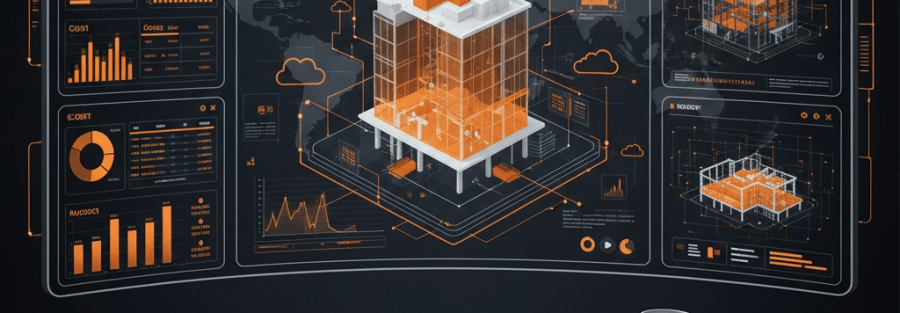
Construction has always been seen as a physical industry. Concrete is poured on site. Steel is assembled on location. Teams gather around drawings in site offices. For decades, that was the only way projects moved forward.
But something has changed.
Today, a developer in the United States can review structural drawings prepared in Zambia. A diaspora investor in the UK can verify construction progress happening in Africa. A contractor can receive updated documentation instantly through cloud systems. The physical nature of construction remains, but the intelligence behind it has gone digital.
So what does this shift really mean for the future?
From Physical Presence to Digital Precision
In the past, managing construction required constant physical supervision. If you were not on site, decisions slowed down. Approvals were delayed. Information moved slowly.
Digital construction services remove that bottleneck. Architectural plans, structural documentation, cost reports, and advisory insights can now be delivered securely online. Teams collaborate through shared platforms. Documents are updated in real time. Communication becomes structured instead of reactive.
This shift is not about replacing construction. It is about strengthening the systems that guide it.
Breaking Geographic Barriers
One of the most powerful outcomes of digital construction services is the removal of geographic limits. Expertise no longer needs to sit in the same city as the project.
A Zambian-based engineering consultancy can serve clients in the Middle East. A European investor can hire cost analysts who operate entirely online. Skilled professionals can export intellectual services globally without physical relocation.
This creates opportunity on both sides. Clients gain access to high-quality services. Firms operate efficiently with lower overhead. The result is competitive pricing without sacrificing professional standards.
Smarter Cost Control Through Digital Systems
Financial management in construction has always been challenging. Spreadsheets were often created manually. Updates were shared by email. Version control became confusing.
Modern digital systems change this. Bills of Quantities are structured in organized templates. Cost forecasting tools update cash flow projections. Payment verification aligns with measurable progress. Every financial movement leaves a digital trail.
With cloud-based documentation and structured workflows, transparency increases. Risk decreases. Investors gain clearer visibility into where funds are going and why.
Is this not the kind of clarity every builder wants?
Data-Driven Decision Making
The future of construction services is not just digital. It is analytical.
When documentation is organized digitally, it becomes easier to review trends. Budget performance can be tracked. Schedule delays can be analyzed. Material consumption can be evaluated.
Instead of relying on memory or informal reporting, decisions are supported by structured information. This strengthens planning for future projects and improves long-term sustainability.
The Rise of Remote Advisory
Diaspora investment continues to expand. Many property owners live in one country while building in another. Without digital advisory systems, that gap creates risk.
Remote construction advisory allows professionals to review progress, verify costs, and assess compliance from a distance. Digital documentation supports accountability. Structured reporting builds trust.
This is not simply a temporary solution. It is becoming the standard approach for cross-border property development.
Digital Templates and Scalable Tools
Another major shift in the industry is the use of standardized digital templates. Instead of creating documentation from scratch for every project, firms now rely on structured systems.
Editable BOQ templates, contract frameworks, scheduling tools, and risk assessment matrices increase consistency. They reduce administrative errors. They improve coordination between teams.
As these tools continue to evolve, construction management becomes more organized and predictable.
A More Efficient Industry
Lower overhead. Faster communication. Structured workflows. Global reach.
Digital construction services are reshaping how projects are designed, costed, and supervised. While the physical act of building will always require hands-on work, the strategy, documentation, and financial control behind it are increasingly digital.
For companies willing to adapt, the future is not uncertain. It is structured, transparent, and globally connected.
Building Smarter, Not Harder
The future of construction does not mean abandoning tradition. It means improving it.
Digital engineering documentation ensures accuracy. Remote advisory strengthens oversight. Structured costing protects budgets. Cloud collaboration increases efficiency.
Building smarter across borders is no longer an idea. It is already happening.
The question is simple. Will you rely on outdated processes, or will you embrace systems that bring clarity, control, and global reach to your projects?
The future of construction services is digital. And it is only just beginning.